The Strikes They Didn’t Teach You. The Losses You’re Still Paying For.
The eight-hour workday, the weekend, the right to organize. None of these arrived because employers decided to be generous. They arrived because workers held a line at tremendous cost. Here is what that cost actually looked like.

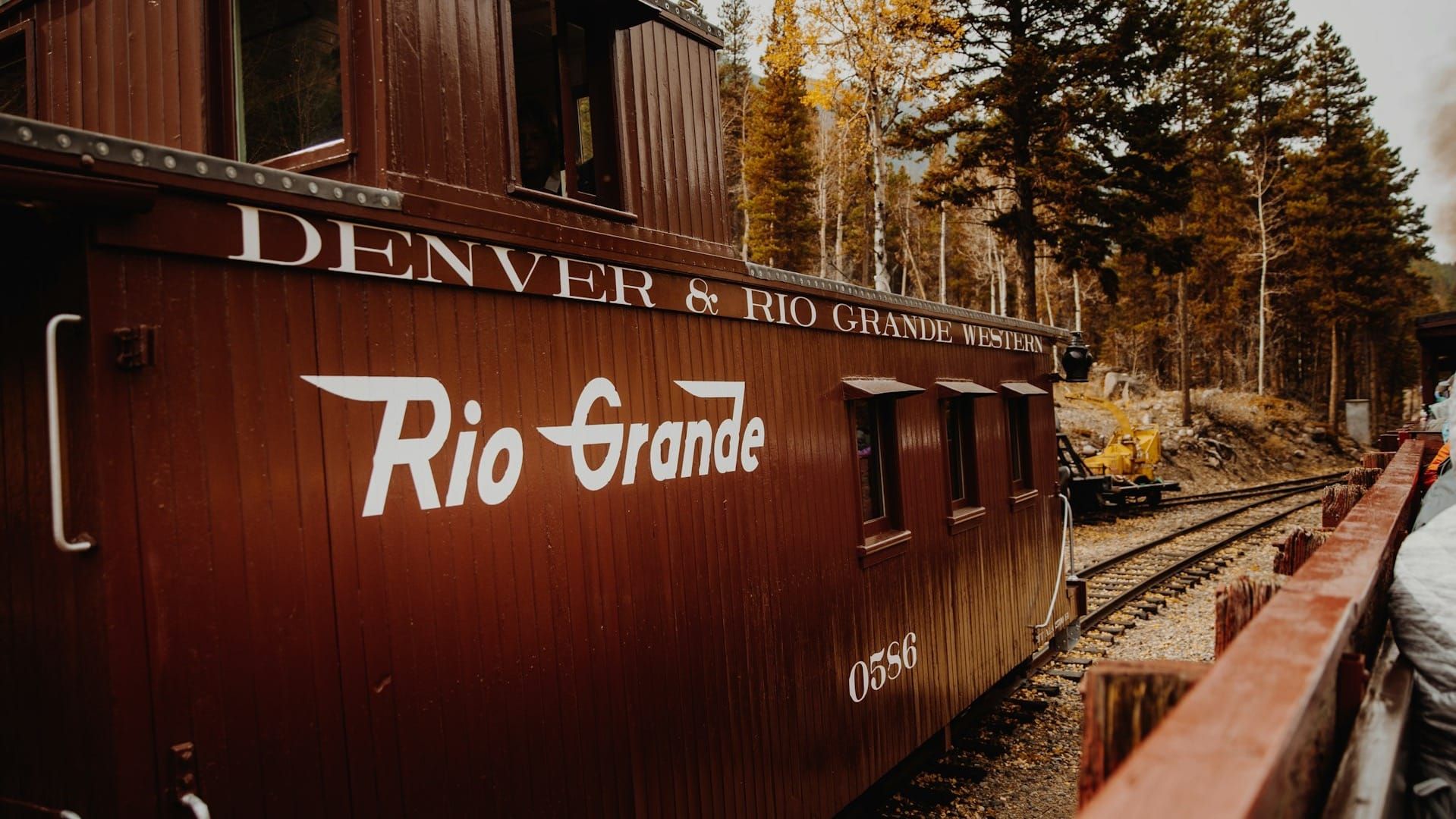
Today is the 112th anniversary of the Ludlow Massacre. On April 20, 1914, the Colorado National Guard, paid by Rockefeller’s coal company, opened fire on a tent colony of striking miners and their families, then soaked the tents in kerosene and lit them. Eleven children and two women suffocated in a pit they had dug beneath their tent for shelter. The guardsmen were never charged. The date is not in most American history books. It is not a national day of remembrance. Most workers alive today have never heard of it.
That is not an accident. It is a policy.
There is a version of American labor history that gets taught in schools. It goes something like this: workers were once treated badly, unions formed, things got better, and now we have weekends. It is tidy, it is brief, and it is missing almost everything that actually matters.
What gets left out are the bodies. The massacres that didn’t make the textbooks. The strikes that moved the country and then got scrubbed from the record. The organizing victories that cost people everything, and the systematic effort to make sure future generations of workers would never know what their predecessors had already won and lost, sometimes multiple times over, fighting for the same rights.
The erasure is the point. It always has been.
The Erasure Was the Point
Why the Story Gets Lost
Labor history disappears from the American curriculum the way most inconvenient things disappear, not all at once, but steadily, through the slow accumulation of decisions about what counts as worth teaching. A superintendent here, a textbook committee there, a school board with corporate donors and a preference for framing the past as settled and peaceful. The result is a workforce that enters the labor market with almost no understanding of how the terms of that market were negotiated in the first place, or how violent that negotiation actually was.
The omission is not small. Workers who don’t know their history can’t read the present. They can’t recognize a rollback when they see one because they don’t know what was there before. They can’t build on prior victories because no one told them those victories existed. And they are far easier to manage when they believe the current arrangement is natural, inevitable, or simply how things have always been.
The Pattern
What the buried moments share is a pattern that repeats with striking consistency across more than a century. Workers organize. Employers respond with force, either private security, state militia, or both. Workers are killed, arrested, or replaced. The legal system acquits the perpetrators. The press moves on. And within a generation, the event is gone from public memory, surviving only in the oral histories of the communities directly affected and in the archives of labor historians willing to do the work of recovery.
The forces that benefit from this erasure are not mysterious. Coal operators, railroad barons, meatpackers, and the political class that served their interests understood clearly that a workforce with a long memory is a workforce that knows it can win. Keeping the memory short was, and remains, a strategic interest.
What It Costs Now
The cost of this amnesia is not abstract. Workers in 2026 are negotiating over AI displacement, shrinking NLRB enforcement, and the steady erosion of public sector protections, fighting battles that earlier generations already fought, and in some cases already won, at enormous personal cost. The eight-hour workday, the right to organize, the weekend, the prohibition on child labor, none of these arrived because employers decided to be generous. They arrived because workers made it impossible to ignore them, and held that line at tremendous cost. Forgetting that cost doesn’t make the battles easier. It makes them invisible until they’re already lost.
The Events
The Massacres Nobody Named
Lattimer, Pennsylvania, 1897. On September 10, roughly 400 unarmed immigrant miners, mostly Polish, Slovak, and Lithuanian workers, raised an American flag and marched peacefully toward the Lattimer mine to support a newly formed United Mine Workers chapter. Luzerne County Sheriff James Martin and 150 armed deputies met them on the road. According to historical accounts, one deputy had been overheard on the streetcar ride over saying he intended to shoot six of the marchers when he arrived. Nineteen miners were killed. Dozens more were wounded. Sheriff Martin and his deputies were tried for murder and acquitted. The men who died were buried largely in paupers’ graves. The site had no public commemoration for 80 years. The event is absent from the Pennsylvania school curriculum and is not listed on the National Register of Historical Places. What Lattimer produced despite the violence was a dramatic surge in union membership, more than 10,000 new members in the immediate aftermath, and within five years the UMWA had won significant wage increases and safety improvements across the region. The victory came. The names of the dead did not travel with it.
Ludlow, Colorado, 1914. In September 1913, roughly 11,000 coal miners working for the Rockefeller-owned Colorado Fuel and Iron Company went on strike for union recognition, an eight-hour workday, the right to live outside company towns, and an end to being paid in scrip redeemable only at company stores. Evicted from company housing, the striking miners and their families built tent colonies. On April 20, 1914, the Colorado National Guard, whose wages were being paid by Rockefeller interests, opened fire on the largest tent colony at Ludlow with machine guns. That evening, the Guard soaked the tents in kerosene and set them alight. Eleven children and two women who had dug a pit beneath their tent for shelter suffocated in the fire. The total death toll across the Colorado Coalfield War reached approximately 75. The UMWA ran out of money and called off the strike in December 1914. The strikers’ demands were not met. Union recognition was not granted. Four hundred and eight strikers were arrested, 332 indicted for murder. No guardsmen faced criminal accountability. What the massacre did produce, through the force of public outrage, was congressional pressure that eventually contributed to child labor laws and the eight-hour workday. The children in the pit are not in most American history books. Today is the anniversary of the day they died.
Blair Mountain, West Virginia, 1921. In late August 1921, approximately 10,000 armed coal miners marched from Marmet, West Virginia toward Mingo County, where martial law was being used to suppress union organizing. The march was the culmination of years of violence by coal company-hired Baldwin-Felts agents, including the murder of pro-union Police Chief Sid Hatfield on the steps of a courthouse while his wife watched. The Battle of Blair Mountain lasted five days. Approximately one million rounds were fired. The miners’ army was racially integrated at a time when coal company towns were strictly segregated. Black and white miners, alongside Polish, Hungarian, and Italian immigrants, fought together because they understood that division was the operators’ primary tool. The federal government ultimately intervened with Army troops and military aircraft, the first time in American history that the government used air power against its own citizens. The miners surrendered rather than fire on their own country’s military. Blair Mountain remains the largest armed labor uprising in United States history. It is almost entirely absent from American history curricula.
The Strikes That Moved the Country
Pullman, Illinois, 1894. When the Pullman Palace Car Company cut wages by 25 to 40 percent without reducing rents in the company-owned town where workers were required to live, workers walked off the job. The American Railway Union, led by Eugene V. Debs, launched a boycott that spread to 27 states and involved 250,000 workers, effectively paralyzing rail traffic nationally. President Grover Cleveland ordered federal troops to break the strike over the objection of the Illinois governor. Debs was arrested and sentenced to six months in federal prison. Thirteen strikers were killed. The strike was crushed. Six months later, Congress created Labor Day as a federal holiday, deliberately choosing September rather than May 1st, the international workers’ day with its roots in American labor struggle, as a way of separating the American workforce from a tradition of solidarity that was considered too radical to recognize.
Triangle Shirtwaist Factory, New York, 1911. On March 25, 1911, a fire broke out at the Triangle Shirtwaist Factory in lower Manhattan. The exits were locked. The fire escapes collapsed. One hundred and forty-six garment workers, mostly young immigrant women, died, many jumping from ninth-floor windows to escape the flames. What gets remembered is the horror. What gets left out is that those workers had already tried to win protections through organizing. The International Ladies’ Garment Workers’ Union had led a citywide shirtwaist strike just two years earlier, in 1909, winning some improvements at some shops but not at Triangle, where ownership refused to settle. The owners were acquitted of manslaughter after the fire. They collected insurance payouts exceeding their losses. Frances Perkins, who witnessed the fire from the street and later became Franklin Roosevelt’s Secretary of Labor, credited Triangle with shaping the New Deal labor framework. The lesson the standard history draws is that tragedy produces reform. The lesson the record supports is that workers tried to prevent the tragedy through collective action, were defeated, and then died. The reform came from the bodies, not from the organizing that preceded them, and that distinction matters enormously for how we understand what actually produces change.
Memphis, Tennessee, 1968. On February 1, 1968, two Black sanitation workers, Echol Cole and Robert Walker, took shelter from a rainstorm in the back of their malfunctioning garbage truck. The compactor crushed them. The city’s workers’ compensation program did not cover them. Their families were left with nothing. Eleven days later, 1,300 Black men from the Memphis Department of Public Works went on strike, demanding higher wages, union recognition, and basic dignity. The signs they carried read: I AM A MAN. Memphis Mayor Henry Loeb refused to negotiate. Martin Luther King Jr. came to Memphis to march with the sanitation workers. He was assassinated on April 4, 1968, on the balcony of the Lorraine Motel, the night after delivering his “I’ve Been to the Mountaintop” speech to the strikers. The strike ended twelve days later with union recognition and a wage increase. The victory is real. The cost at which it arrived, a man’s life, and the way that cost reshaped the civil rights movement’s trajectory, is rarely part of how the story gets told.
Delano, California, 1965. On September 8, 1965, Filipino farmworkers with the Agricultural Workers Organizing Committee walked off the grape fields in Delano. Eight days later, César Chávez and the National Farm Workers Association joined the strike. What followed was a five-year campaign that included a 340-mile march to Sacramento, a national grape boycott, and sustained organizing across the Central Valley and East Los Angeles. The Delano Grape Strike ended in 1970 with the first successful farmworker union contracts in American history. The workforce that won those contracts had been explicitly excluded from the protections of the National Labor Relations Act since 1935, a deliberate carveout negotiated to secure the votes of Southern Democrats who needed agricultural labor, meaning Black and Brown workers, kept outside the law’s reach. That exclusion lasted 40 years before organizing forced the question. In California’s fields and in the streets of East LA, workers rewrote the terms of what was considered possible. The national press treated it as a regional story. It was a foundational one.
The Day America Exported and Then Forgot
May Day, International Workers’ Day, was born in the United States. On May 1, 1886, 80,000 workers in Chicago struck for the eight-hour workday in what became the opening act of a national movement. Four days later, someone threw a bomb at police during a rally in Haymarket Square. Eight labor organizers were arrested. Four were hanged after a trial widely described by legal observers as a miscarriage of justice. The international labor movement adopted May 1 as its commemorative day in honor of the Haymarket martyrs. The United States, meanwhile, moved its official labor holiday to September, choosing a date with no radical associations and a president who needed political distance from the Pullman Strike he had just used federal troops to crush. May Day became a global holiday rooted in American events that America then spent the better part of a century trying to suppress, associate with communism, and scrub from its own calendar. The irony is structural, and it was deliberate.
What the Record Actually Shows
THE GAP
What these moments share is not just violence or injustice, though they have both in abundance. What they share is a gap between what workers actually won in these struggles and what history credits them with. The eight-hour workday, the weekend, child labor protections, the right to organize, union recognition for public employees, the first farmworker contracts, none of these arrived as gifts from enlightened employers or generous legislators. They arrived because workers made the cost of not granting them too high to sustain. And they arrived unevenly, often excluding the most vulnerable workers, often clawed back within a generation, often requiring the same fight to be fought again from scratch by workers who had no idea it had already been fought.
The gap between what was won and what was kept is the central story of American labor history. It is also the story most systematically absent from the way that history gets told.
WHO PROFITS
Controlling the narrative is its own form of power, and the institutions that shape what gets taught have always understood that. Corporate interests fund textbook publishers and the think tanks that produce the frameworks educators use. Politicians who depend on those interests have no reason to champion a curriculum that teaches workers what power actually looks like and how it gets taken away. The result is a story that acknowledges labor’s contribution to American prosperity in the most general terms while removing from view the specific mechanisms by which that contribution was extracted, the specific people who extracted it, and the specific violence used to keep workers from demanding a different arrangement.
The documentary record is plain. The sheriff at Lattimer was acquitted. The owners of the Triangle factory walked free. The National Guard officers at Ludlow faced no charges. The federal government at Blair Mountain deployed the Army against miners, not operators. In each case, the institutions that adjudicated these events sided with capital, and the institutions that shaped public memory followed. What profits from this arrangement is not any single industry but the broader logic that workers are resources to be managed rather than people with legitimate claims on the value they produce. That logic requires a workforce that doesn’t know its own history well enough to argue otherwise. In 2026, that workforce is being asked to accept AI displacement, eroded enforcement, and diminished protections as if these are new conditions rather than old ones with new names. They are not new. The playbook is the same. Only the technology has changed.
Further Reading and Where to Go Next
The events covered here have been documented by serious historians whose work deserves a wider audience. For those who want to go deeper:
On the broader arc: Howard Zinn’s A People’s History of the United States remains the essential starting point, written with the explicit goal of telling American history from the perspective of those who built it rather than those who owned it. Philip Dray’s There Is Power in a Union provides the most comprehensive single-volume narrative of American labor history. Erik Loomis’s A History of America in Ten Strikes offers a sharper, more contemporary structural analysis organized around ten pivotal labor actions.
On specific events: Paul Shackel’s Remembering Lattimer: Labor, Migration, and Race in Pennsylvania Anthracite Country is the definitive work on the 1897 massacre and its erasure. Thomas Andrews’s Killing for Coal: America’s Deadliest Labor War covers the Colorado coalfields and Ludlow. Chuck Keeney’s Road to Blair Mountain is both family memoir and historical account from a descendant of the miners who marched. Michael Honey’s Going Down Jericho Road is the standard history of the Memphis sanitation strike and King’s final campaign. Frank Bardacke’s Trampling Out the Vintage: César Chávez and the Two Souls of the United Farm Workers is the most complete and honest account of the UFW’s rise, including the tensions within the movement that the hagiographic version tends to leave out.
The record exists. It has always existed. What changes is whether workers decide it belongs to them.
Our Revolution Media is an independent publication covering labor, power, and political economy from East LA. Subscribe at ourrevolution.media.