They Do Not Want a King, They Want Their Country Back
More than 3,000 protests. All 50 states. One question the mainstream coverage is not asking: when organized labor, antiwar organizers, and immigrant rights coalitions march together, is that still just a protest?

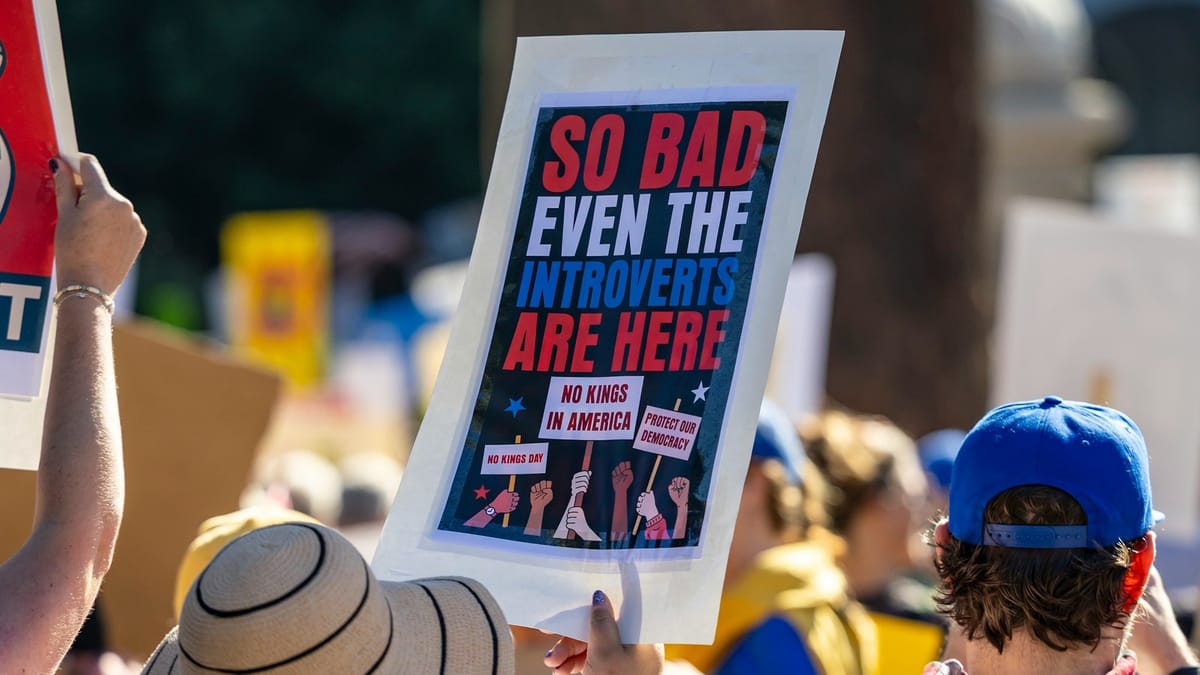
The No Kings protests return March 28. This is the third mobilization. It is not the last.
Three names, and countless others, have become the reason millions of Americans are expected to take to the streets on Saturday.
Keith Porter Jr. was shot and killed by an off-duty ICE officer in Los Angeles on New Year's Eve. Renée Good was shot and killed by an ICE agent in Minneapolis on January 7, in her car, in front of witnesses and cameras. Alex Pretti, an ICU nurse at the Veterans Health Administration who had been on the street opposing the federal occupation of his city, was shot and killed by federal agents on January 25. He was a U.S. citizen. They all were.
Since this administration took office in 2025, at least six people have died in ICE custody. Last year, 32 people died in ICE custody, making it the agency's deadliest year in more than two decades. Those numbers are the context the administration does not want attached to the word "enforcement."
The March 28 protests, called No Kings 3, are the third in a series of demonstrations organized in response to ICE operations and the killings that followed Operation Metro Surge, organized by a coalition that includes Indivisible, 50501, and the AFL-CIO. When organizers describe what they are protesting, they name authoritarianism, an unconstitutional war, the cost of living, and the systematic terror being used to manage a population into silence. That list has gotten longer since the first No Kings protest in June 2025.
This is what the third mobilization looks like, what built it, and what it means for the movement going forward.
How We Got Here
From June to Now: The Arc of the Movement
The No Kings protests first emerged in 2025, shortly after Trump's second term began, organized by Indivisible, which describes itself as a nationwide movement to stop the rise of authoritarianism and build a real democracy that works for all people. The June 2025 protest was held on Trump's birthday, the same day he staged a military parade in Washington. That framing was not accidental. Nationally, organizers estimated that more than 5 million people participated across more than 2,000 protests.
The October 2025 mobilization grew the movement further. In New York City alone, upwards of 100,000 people participated, marching through the streets of Manhattan. The scale of the October protests established something important: this was not a one-time reaction to a single policy. It was an organized, recurring pressure campaign with infrastructure and staying power.
Between October and March, the conditions that built the movement intensified. The administration invaded Venezuela and attacked Iran. Operation Metro Surge, described as the largest immigration enforcement operation in U.S. history, turned Minneapolis into a flashpoint. Federal agents used pepper balls and tear gas against protesters, including near schools. Images from those confrontations prompted concerns even from some Trump administration officials over the optics of the crackdown, leading to the withdrawal of some federal law enforcement personnel from the Twin Cities. The withdrawal did not come before the shootings.
The Killings That Changed the Calculus
Renée Good's killing did not happen in isolation. It happened on the seventh day of a militarized federal operation in a major American city, during which masked agents without visible identification were conducting mass arrests. The occupation of Minneapolis by ICE brought mass detention, family separations, chemical agents deployed around schools, and a generalized climate of fear. Images circulated of the detention of a five-year-old child and of an older Hmong-American U.S. citizen marched through subfreezing weather in his underwear.
Alex Pretti's death eighteen days later, a VA nurse shot while opposing what was happening in his city, produced a specific kind of grief in the labor and healthcare communities. Nurses held vigils from Tacoma to Spokane. The Washington State Nurses Association and the American Nurses Association both called for transparency and accountability. The AFL-CIO's formal alignment with the No Kings coalition after the Minnesota killings was not symbolic. It was a signal that organized labor was treating this as a worker safety and civil liberties issue, not just a political one.
The Lawsuit Nobody Covered
That lawsuit is the legal embodiment of what the protests are saying out loud: the government is not investigating itself. Someone has to apply pressure from outside the system, because inside the system, the evidence is being buried.
What Saturday Looks Like
The Scale
More than 3,200 events are scheduled to take place on Saturday across all 50 states, with events also being held internationally. Organizers are preparing for the largest No Kings mobilization yet, against the backdrop of the U.S.-Israel war with Iran and an ongoing partial government shutdown.
The flagship event is in St. Paul, Minnesota, just miles from where federal immigration agents killed Renée Good and Alex Pretti in January. Speakers and performers include Senator Bernie Sanders, Bruce Springsteen, Jane Fonda, and Joan Baez. The choice of location is the argument. Minneapolis is not incidental backdrop. It is the reason.
The Coalition Behind It
What is different about No Kings 3 is who is in the room. The AFL-CIO's involvement brings organized labor formally into alignment with an immigrant rights and anti-authoritarian movement. The American Federation of Teachers is a supporting organization. AFT president Randi Weingarten framed the contradiction plainly: "A billion dollars a day for this war, and yet we couldn't find the money for the Obamacare tax credits?"
The coalition also runs deeper than the flagship names. Voto Latino, MoveOn Civic Action, the Immigrant Defense Network, and dozens of local and regional organizations have been building infrastructure for this moment since October. The "Eyes on ICE" training program, launched after the Minnesota killings, drew more than 200,000 viewers to its first session, equipping ordinary people with tools to monitor and document federal enforcement in their communities. That is movement infrastructure, not flash mobilization.
What the Administration Is Saying
Trump has dismissed the protests repeatedly, telling Fox News "I'm not a king." Several Republican officials have labeled the protests as anti-American. Ezra Levin, Indivisible's co-executive director, answered that framing directly: "With every ICE raid, every escalation abroad, and every abuse of power at home, Americans are rising up in opposition to Trump's attempt to rule through fear and force. From every corner of this country, we are all saying: No Kings."
The administration's strategic response has been consistent: dismiss the scale, question the legitimacy, and wait for the energy to exhaust itself. The movement's response has been equally consistent: grow the coalition, document the deaths, and come back larger.
What It Means
The Labor Connection Is the Story
Most coverage of the No Kings protests frames them as anti-Trump demonstrations, which is accurate but incomplete. The AFL-CIO's formal alignment signals something more specific: organized labor is treating the ICE enforcement campaign as a direct threat to workers, not just to immigrants. When federal agents detain workers mid-shift, when a VA nurse is shot at a protest, when teachers cannot get students to school because ICE is stationed outside, these are labor conditions. The mainstream framing misses the connective tissue between immigration enforcement and the working conditions of everyone living in an enforcement zone.
The Iran Dimension
Since the October No Kings protests, the administration has invaded Venezuela and attacked Iran. Opposition to the Iran war is a new and significant dimension of the March 28 mobilization, one that broadens the coalition beyond immigration-focused organizing and into antiwar territory. That is a meaningful shift. It brings in constituencies who may have been adjacent to the movement without being central to it, and it connects the cost of war abroad to the cost of living at home in a frame that organizers have made explicit.
The Movement's Own Question
The honest question the No Kings coalition is now facing is the one every sustained protest movement eventually confronts: what does pressure without electoral power produce in the short term? The midterms are seven months away. The Senate recess begins March 30. The administration has shown no indication that mass demonstrations change its enforcement calculus.
But that framing misunderstands what March 28 is actually doing.
Movements do not win on the day of the march. They win by making the cost of silence higher than the cost of action, by building the organizational infrastructure that outlasts any single mobilization, and by keeping names in public view that power would prefer to let fade. Keith Porter Jr. Renée Good. Alex Pretti. The 40 people who have died in detention since this administration took office.
The lawsuit filed three days ago in Washington is the direct result of that sustained pressure. The AFL-CIO's formal alignment is the direct result of that sustained pressure. The 3,200 events scheduled across all 50 states tomorrow are the direct result of that sustained pressure.
The protests are not asking for permission. They are building the record, and the record is what wins in November.
THE GAP
What most coverage is missing: the labor angle is being treated as a supporting detail rather than the structural story. When the AFL-CIO formally aligns with an anti-authoritarian coalition, that is not a cameo. It is a realignment. The Iran war's role in expanding the coalition has also been underreported outside of left-leaning outlets. And the Minnesota lawsuit filed three days before the protests, which alleges the federal government is actively concealing evidence about the killings that catalyzed this entire mobilization, has received almost no national attention. The protests are the story editors are chasing. The lawsuit is the story that matters longer.
ROOT
How we got here in 60 seconds:
January 1, 2026: Keith Porter Jr. is shot and killed by an off-duty ICE officer in Los Angeles.
January 7, 2026: Renée Good is shot and killed by an ICE agent in Minneapolis during Operation Metro Surge.
January 23, 2026: A general strike in Minnesota shuts down the Twin Cities in response to the federal occupation.
January 25, 2026: Alex Pretti, a VA nurse and U.S. citizen, is shot and killed by federal agents at a Minneapolis protest.
January 30, 2026: A nationwide general strike expands the Minnesota action across the country.
March 24, 2026: Minnesota, Hennepin County, and the Minnesota BCA sue the DOJ and DHS for concealing evidence in the killings.
March 28, 2026: More than 3,000 No Kings events are scheduled across all 50 states and internationally.
WHO PROFITS
The enforcement campaign that produced Operation Metro Surge, the killings in Minneapolis, and the climate of terror that organizers are now mobilizing against does not benefit public safety. Federal data already showed noncitizen crime rates are lower than citizen crime rates. The enforcement operations have disrupted schools, hospitals, and workplaces in ways that create measurable harm to communities regardless of immigration status.
What the enforcement campaign does produce is a politics of fear that is useful to consolidate power, suppress dissent, and redirect economic anxiety toward a visible target. The people who profit from that politics are not in the streets on Saturday. The people paying the cost are.
FURTHER READING
For the full timeline of the Minnesota killings and aftermath: Killing of Renée Good, Wikipedia
For the No Kings coalition's statement on the killings and ICE custody deaths: No Kings Coalition Responds to Escalating Brutality, nokings.org
For the labor and healthcare worker response to Pretti's death: Alex Pretti Killing Prompts Protests and Memorials, Washington State Nurses Association
For the scale of Saturday's mobilization and organizer framing: No Kings Protests, Democracy Now!
For the Minnesota lawsuit in full: Minnesota Sues Trump Administration for Evidence in Good, Pretti Killings, Star Tribune
For local event listings: nokings.org
Our Revolution Media covers labor history, political economy, systems thinking, and working-class perspectives. ourrevolution.media