They Came Back to the Table. JBS Didn't Move.
The largest meatpacking strike in 40 years ended without a new contract. 3,800 workers returned to work Tuesday on good faith. JBS returned to the table without moving its offer by a single cent, on $415 million in quarterly profits. The negotiations resume today.

The largest meatpacking strike in 40 days ended without a new contract. The negotiations resume today.
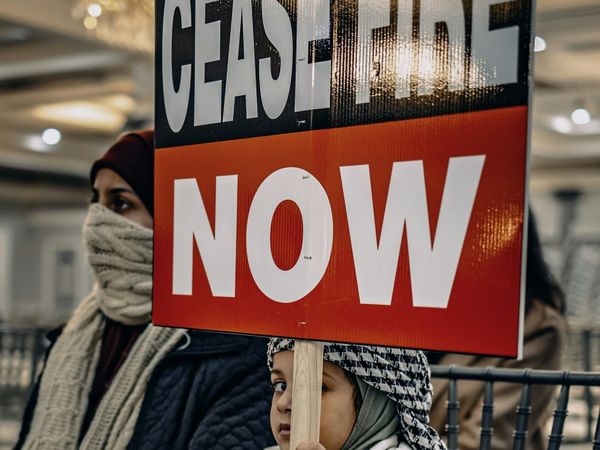
Three weeks on a picket line in 20-degree temperatures. Fifty-seven languages on a quarter-mile of sidewalk. Iftar at sunset, dancehall and kompa from boom boxes held up to megaphones. Nearly 4,000 workers from across the world, united at the largest beef processing plant in the United States, in the first meatpacking strike since 1985.
They went back to work Tuesday without a new contract.
JBS has not improved its offer by a single cent, holding at a 60-cent-per-hour increase in year one followed by 30 cents in each of the next two years. Workers at the Greeley plant process more than six percent of all beef produced in the United States. The company reported $415 million in profits in the fourth quarter of 2025 on $23 billion in revenue. The math is not difficult.
What They Were Actually Striking For
The wage dispute is the headline. The conditions underneath it are the story.
JBS has been increasing the speed of the production line while cutting work hours from 40 a week to 35, squeezing more work for less money. Workers are not provided basic personal protective equipment. A thousand Haitian workers at the Greeley plant have filed a class action lawsuit against JBS alleging discriminatory practices that push them to work at dangerously fast line speeds. At least six workers died in the first year of the coronavirus pandemic and another died in 2021. Last year a whistleblower filed a lawsuit alleging systematic safety failures.
The healthcare dimension connects directly to federal policy. The One Big Beautiful Bill Act cuts that have made coverage more expensive for low-income workers are hitting hardest in exactly the industries where workers already carry the most physical risk. UFCW Local 7 president Kim Cordova put it plainly at the start of the strike: "For months now, JBS has been insisting on poverty-level wages for workers at the plant, while at the same time putting all the risk of rising healthcare costs on workers."
These are not separate issues. Wage compression and healthcare cost-shifting are the same move, extracting more value from labor while reducing what the company is obligated to return. The Greeley plant is doing both simultaneously, inside an industry that has spent decades perfecting the combination.
The Industry Behind the Plant
The Greeley strike did not happen in isolation. It happened inside one of the most concentrated industries in the American economy.
Union density in meatpacking has fallen from roughly 90 percent in the postwar era to 15 percent by 2019, as the industry consolidated and shuttered unionized plants only to restart production in nonunion facilities. The four major beef processors, JBS, Tyson, Cargill, and National Beef, now control 85 percent of all US beef production. JBS alone is the largest meatpacking company in the world, headquartered in Brazil, operating in nine countries, with 109,000 employees in the United States alone.
The concentration is not incidental to the labor conditions. It is the mechanism that produces them. When four companies control 85 percent of an industry, the leverage available to workers at any single plant is structurally limited. The national agreement between UFCW and JBS prevented sympathy strikes at the 14 other JBS plants covered by the contract, which meant the Cactus, Texas facility processed diverted beef from Greeley throughout the strike, with UFCW members in Texas effectively crossing a picket line drawn by their own union.
That structural limitation is the reason 3,800 workers returned to work without a new contract. The company had options. The workers had the picket line.
THE GAP
The Greeley strike received national coverage at its launch and at its resolution. The period in between, three weeks of an immigrant workforce holding a line in sub-freezing temperatures against the world's largest meatpacker, received considerably less. The specific details that make this story structurally important, the class action lawsuit by Haitian workers, the line speed acceleration, the healthcare cost-shifting, the national agreement that prevented solidarity strikes, the fact that JBS returned to the table without moving its offer, appear rarely in the same piece. They are the story. The wage number is the symptom.
WHO PROFITS
JBS returned to the table without moving its offer. The negotiations resume today. If the pattern holds, the company will offer a modest revision, the union will call it progress, and the workers who process six percent of American beef will return to a line running faster than it did before the strike. The conditions that produced this walkout will remain. The next one will be larger. The workers who held that line for three weeks in 20-degree temperatures deserve better than a number that inflation erases before the ink dries.
FURTHER READING
For the strike conditions on the ground: The Biggest US Meatpacking Strike in 40 Years Is Still On — Jacobin
For the strike launch and worker voices: Thousands of JBS Workers Go on Strike — Colorado Sun
For the return to work and contract terms: JBS Workers Return to Work, Resume Negotiations — Rocky Mountain Collegian
For the industry concentration context: Meatpackers End Strike with Promise to Return to Bargaining — Democracy Now
For the negotiation timeline: JBS Strike Extends into Third Week — Colorado Public Radio
Our Revolution Media covers labor history, political economy, systems thinking, and working-class perspectives. ourrevolution.media