They Broke the Airport on Purpose
FAA, DOGE, and 45 Years of Aviation Policy

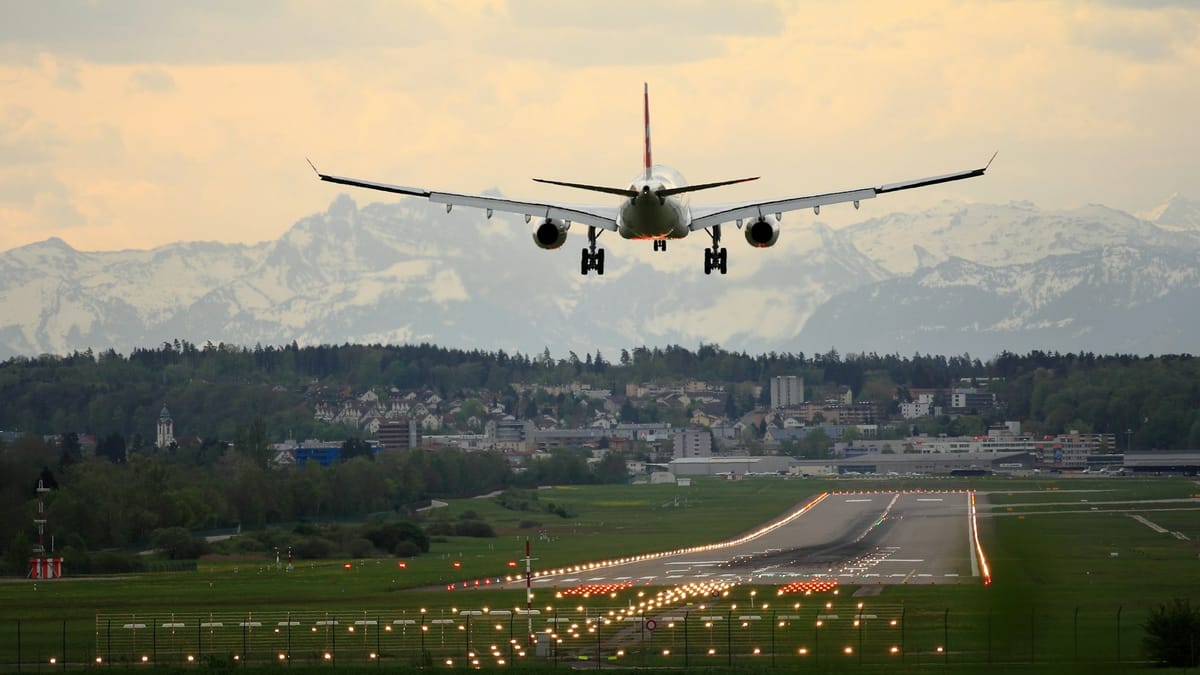
America's air traffic crisis isn't a glitch. It's the predictable outcome of 45 years of deliberate choices about who the sky is for.
The Sky Is Falling, One Flight at a Time
If you've flown through Newark recently, the chaos has a face: delayed boards, gate announcements about "staffing," and flights that disappear from the departure screen before they were ever supposed to leave. Behind every one of those delays is a controller who doesn't exist, a position that was never filled, a workforce that was told for decades that it was the cost to cut, not the system to protect.
Newark Liberty International Airport has been operating at roughly 75% capacity since May 2025, with the FAA extending flight cuts through October 2026 after repeated system failures tied to a shortage of air traffic controllers. The FAA is currently 3,500 controllers short of its own staffing targets, a deficit that existed long before anyone had heard of DOGE. In February 2025, the Department of Government Efficiency cut 400 FAA employees into that existing hole. A federal judge later ruled the firings violated regulations, and 132 workers were reinstated with back pay. The damage, though, was already done. Delays, near misses, and a general atmosphere of managed dysfunction have become the baseline of American air travel. The question in every airport lounge is the wrong one. It's not how this happened, it's why we were surprised.
Reagan Broke the Pipeline, and We Never Fixed It
To understand Newark in 2026, you have to go back to August 3, 1981, when President Ronald Reagan fired 11,000 striking air traffic controllers in a single announcement. The Professional Air Traffic Controllers Organization, known as PATCO, had spent years negotiating over chronic understaffing, grueling shift schedules, and equipment that was already a decade out of date. When the strike came, Reagan didn't negotiate. He decertified the union, banned the strikers from federal employment for life, and replaced them with supervisors and military personnel patching a system that had been running on institutional knowledge that just walked out the door.
The staffing hole that created lasted well into the George H.W. Bush administration and took more than a decade to partially close. "Partially" is doing a lot of work in that sentence. The legacy of the PATCO strike wasn't just an air traffic shortage. It was a message sent to every public sector worker in America: the government would rather dismantle a workforce than bargain with it. It also established the operating logic for how aviation infrastructure would be treated for the next four decades, as a cost to minimize rather than a system worth maintaining. U.S. union membership declined from 20.9% in 1981 to roughly 10% today. The controller pipeline never fully recovered. That wasn't an accident, it was a policy outcome.
Deregulation Told Us Who Would Pay
Three years before Reagan fired the controllers, Congress passed the Airline Deregulation Act of 1978, removing federal control over fares and routes and handing pricing power to the market. Ticket prices dropped in the short term, new routes opened, and the industry consolidated rapidly into the handful of major carriers we have today. What did not consolidate was accountability. The federal government kept the obligation to maintain air traffic control, airports, and safety infrastructure. The airlines kept the profits.
For 45 years, that arrangement held, unevenly, expensively, and with increasing strain. Private equity moved into regional carriers and cut everything not generating a quarterly return. Maintenance workforces thinned. The controller training pipeline, which takes years to produce a single certified controller, was never adequately funded because it didn't show up on any airline's balance sheet. When DOGE arrived with a mandate to reduce headcount rather than fix systems, it found an infrastructure that had been quietly failing for decades and chose to accelerate the timeline.
Accountability here looks like naming what this is: a policy system designed to push the cost of aviation onto workers and passengers while the industry captures the upside. Not a bug, by design. And until the people responsible for that design, the carriers, the private equity owners, and the legislators who protected them, are made to share the cost of what they broke, the departure boards at Newark will keep going blank.
THE GAP
What the mainstream coverage missed:
Most coverage has treated the Newark crisis as either a DOGE story or a management story. It is neither. It is a 45-year labor story, beginning with Reagan's destruction of PATCO in 1981, which created a controller shortage the country never fully recovered from and signaled to every subsequent administration that aviation workers were expendable. DOGE didn't break the airport. It just kicked something that was already cracked.
ROOT
How we got here in 60 seconds:
- 1978: Congress passes the Airline Deregulation Act, removing federal oversight of fares and routes. Airlines absorb the profit. The public absorbs the infrastructure cost.
- 1981: Reagan fires 11,000 striking PATCO air traffic controllers. The staffing deficit lasts over a decade. Union membership in the U.S. begins a 40-year decline.
- 2003: After 9/11, TSA federalization reorganizes aviation security but does not solve the controller training pipeline.
- 2023: FAA reports a 3,500-controller staffing deficit and warns of systemic risk at major hubs, including Newark.
- 2025: DOGE cuts 400 FAA employees into the existing shortage. Newark cuts 25% of flights. The FAA extends the cap through October 2026.
WHO PROFITS
Airlines and their private equity backers have absorbed 45 years of deregulation's benefits, lower operating costs, consolidated routes, higher fares, while the federal government has absorbed the infrastructure bill. When the infrastructure fails, passengers and workers pay. The industry collects the bailout.
FURTHER READING
Want to go deeper? These are the sources worth your time.
- For the history: Looking Back On When President Reagan Fired The Air Traffic Controllers — NPR
- For the data: FAA Proposes Extending Newark Airport Flight Cuts Through October 2026 — NBC News
- For the systemic picture: Newark Airport Crisis Highlights Chronic Air Traffic Controller Shortage — WSWS
- For the DOGE connection: FAA Cuts 25% of Flights at Newark After Controller Shortage — CNN
- For the labor legacy: The Legacy of the Crushed 1981 PATCO Strike — Jacobin
- For the fact-check: Are FAA Staff Cuts Causing Current Airport Delays? — The Fulcrum